The accent as a homeland
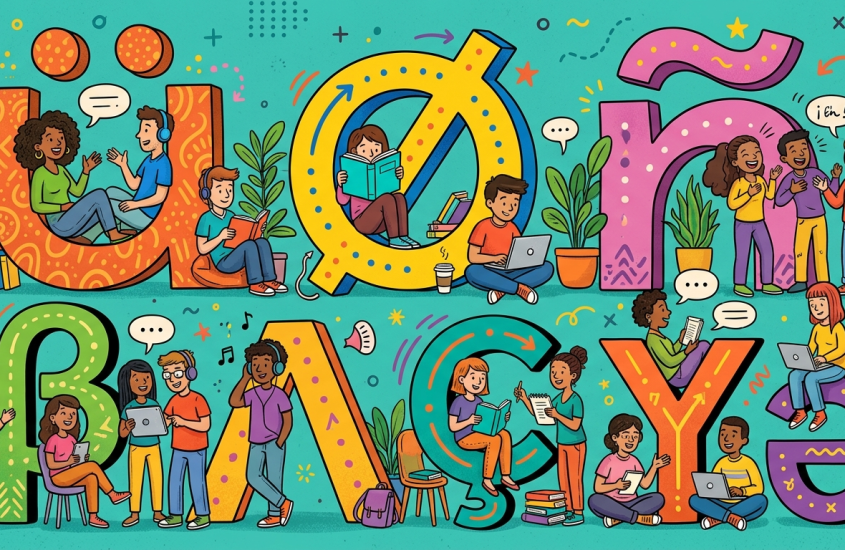
At eighteen I had to learn how to pronounce new vowels. Don’t be fooled: our brain is designed to absorb language when you’re a baby or a child; as you grow up, everything becomes more complicated. There are things you can learn through repetition and memorization—vocabulary, grammar, structures—but the accent… the accent always gives you away.
That “r” that should come from the throat and not the mouth, those “s” sounds with a different texture on the tongue, those “t” sounds that never touch the teeth… And the intonation, of course. Some languages rise, others fall; some voices come from the mouth while others resonate in the chest.
When I started university, I began studying German and discovered that the hardest part wasn’t the accusative or the neuter gender, but forcing my teeth, lips, tongue and throat to pronounce the Ü the way they do in Frankfurt. Sure, I can pronounce it the way anyone in the Macarena neighborhood would, but the real challenge is taking my mouth—and my brain—out of my own neighborhood, out of my own country even, and pretending to be Angela Merkel.
Why else would I spend hours studying German? It’s certainly not to hear people tell me I have a very sweet accent and that they love spending summers in Mallorca. No, no: it’s to master that guttural “r,” that “u” shaped with lips ready to say “i”…
Years like that. I try my best. I lived in Germany for two years, and at some point I managed to fool people with a few words, but overall I was still “the Spanish girl with the accent.”
I struggled with English too. But there’s something funny about English: most of the people I speak it with aren’t native speakers either. They’re Greek, Italian, Czech, Norwegian… Tolerance is high. If we understand each other, that’s enough. Sometimes I talk to Irish people and pay attention to their sing‑song intonation; other times I meet Californians stretching their vowels, or Scots who seem to spit the words instead of pronouncing them.
My obsession with taming my English accent began when I landed in Canada. Native speakers. I wanted to pass as Canadian. I always throw myself into impossible challenges: playing at being someone else. When I was a child, I pretended to be a princess, a doctor, a teacher; as an adult, I pretended to be Canadian.
And then I realized that English is even more complicated than German. I missed German phonetic rules, and I missed Spanish accent marks. We complain about them so much, and in the end they’re a lifesaver. In English every new word is a mystery: you don’t know how it’s pronounced and you have to memorize it. No rules. Pure phonetic anarchy.
Something shifted when I came back from Canada. I don’t know if it was a pinch of nationalism, a reordering of priorities, or simply growing up and deciding who you want to be in the world.
Or maybe it was asking myself: do they really not understand me when I speak with a Spanish accent? Is it that hard to make a small effort to understand me?
If I have a Spanish accent when I speak other languages, it’s because I’m a Spanish speaker.
I’m not exaggerating it; I try to speak as well as I can. But now my obsession has taken other paths: learning unusual words, understanding accents I’m not familiar with, slipping in idioms or expressions at the right moment (sometimes more successfully than others…).
The accent, however, no longer keeps me up at night. Maybe because I’m Andalusian and so many times I was corrected by people from other regions of Spain, now I defend my accent fiercely, even when I speak other languages.
Because in the end I’ve realized something: an accent is not a mistake. It’s a sonic biography. A small homeland you carry in your mouth.