Glocal Christmas
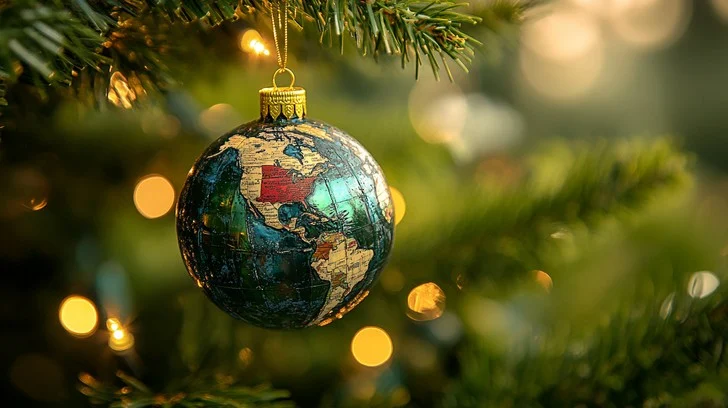
Christmas is a fascinating phenomenon. It’s the most celebrated holiday worldwide and, at its core, looks quite similar everywhere: gifts, meals with family and friends, and streets and homes filled with decorations.
However, each country takes pride in those small traditions that make it unique, turning them into a source of local identity. In Spain, for example, the Three Wise Men are the highlight. Here, gifts arrive on the night of January 5th, and nothing makes us prouder than saying Santa Claus doesn’t visit our homes. “Imperialism hasn’t reached us,” we claim while decorating the Christmas tree.
The debate over who brings the presents is quite interesting:
- In Italy, it’s La Befana, a kind witch who delivers gifts to good children and coal to the naughty ones on January 5th.
- In several European and Latin American countries, gifts are brought by Baby Jesus on his birthday. Ironically, he gives presents instead of receiving them.
- In Central Europe, besides the classic Santa Claus, Saint Nicholas brings small treats on December 6th. And to spice things up, there’s Krampus, a monster who punishes misbehaving children that same night.
- In former Yugoslav countries, I found something curious: they have three different figures! Saint Nicholas on December 6th, Santa Claus on December 25th, and Grandfather Frost on January 1st.
- The award for originality goes to Catalonia’s Tió de Nadal: a “magic” log that’s fed throughout December and, on Christmas Eve, is beaten with sticks so it “poops” gifts and sweets.
Beyond gifts, I love the superstitions surrounding New Year’s Eve:
- In Spain, you must eat 12 grapes in the last twelve seconds of the year to attract good luck. If you’re looking for love, doing it under the table is said to help.
- Toasting is universal, usually with cava, champagne, or cider. Here, if you drop a gold ring into your glass, it’s believed to bring wealth.
- In Colombia, people grab suitcases and walk around the block to ensure travel in the coming year.
- In Italy and some Latin American countries, eating lentils on New Year’s Eve symbolizes prosperity.
- Underwear also plays a role: in Spain, red for love; in Latin America, yellow for wealth; and in Brazil, dressing entirely in white for peace and harmony.
Christmas food is so diverse that it’s impossible to cover it all here, but I was amazed to learn that in Japan, the tradition is eating fried chicken from Kentucky Fried Chicken. Nothing like the lavish feasts common elsewhere.
What about you? Do you know any quirky Christmas or New Year traditions from your country? Share them!