The city and the birds
Despite having spent every summer of my life in the countryside, I am, at heart, a city person. In the city I move naturally: I know where to go, what to look for, which streets to avoid when I sense danger. I handle public transport, drive with patience, and ride my bike through the streets without fear.
Perhaps that’s why, every time I’ve lived in another country, I’ve paid special attention to small urban details that many people overlook but that feel essential to me. Among them, birds. I love watching how they take over the city, anywhere in the world. They’re the last bit of wildness we not only tolerate but even admire.
My first big experience outside Spain was in Germany, and one of the first things that surprised me was the crows. There are none in my city, and suddenly I found black or grey crows on almost every tree, cawing with a sound I had only ever associated with horror movies.
Soon after, I noticed the sparrows—just as common as in Spain, but there they looked rounder, almost like little tennis balls. I figured the German cold must require a thicker plumage than in my beloved Andalusia, the land of sun.
The next country I lived in was Chile. A change of continent and a complete change in urban wildlife. There I discovered all kinds of birds, although the most striking ones were rarely in the trees. I remember the teros walking across the university lawn, alone or in pairs, proud and elegant, always on the ground. The same happened with the bandurrias, which appeared in any small park, digging through the earth with their long beaks. Their sounds didn’t impact me as much as the crows’—perhaps because I had no previous associations with them.
Later, I spent a year in Toronto, Canada. Besides seeing beautiful ducks, I came across flocks of territorial and haughty geese near Lake Ontario. If you got too close, you risked a peck. Now that was true wildlife in the middle of the city. Still, those grumpy geese give their name to the country’s most prized winter clothing brand: Canada Goose.
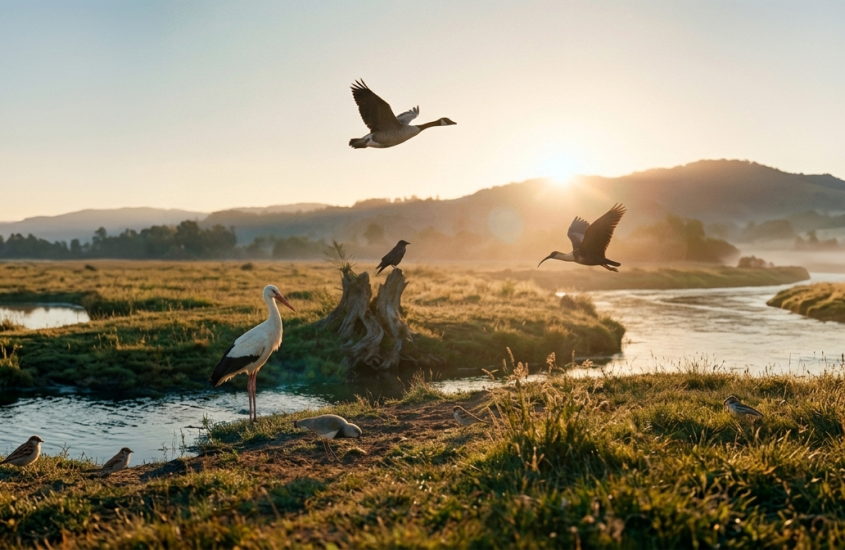
After several years roaming the world, it was time to return home. When I got back to Seville, driving along the SE‑30 highway, I saw pairs of storks flying above my car. I had forgotten about them. I hadn’t seen any in the Americas—not in Chile nor in Canada—and had almost erased them from my mind, even though they’re as much a part of my city as palm trees or orange trees.
Seeing them filled me with a familiar warmth. They reminded me I was home. Those large, elegant storks, white with black wingtips, soaring above me, were a reminder that there is still something wild left in the world. That not everything is covered in concrete.